

The Medicine of Saint Nicholas: A Humanitarian, Healer, and Protector of the Vulnerable
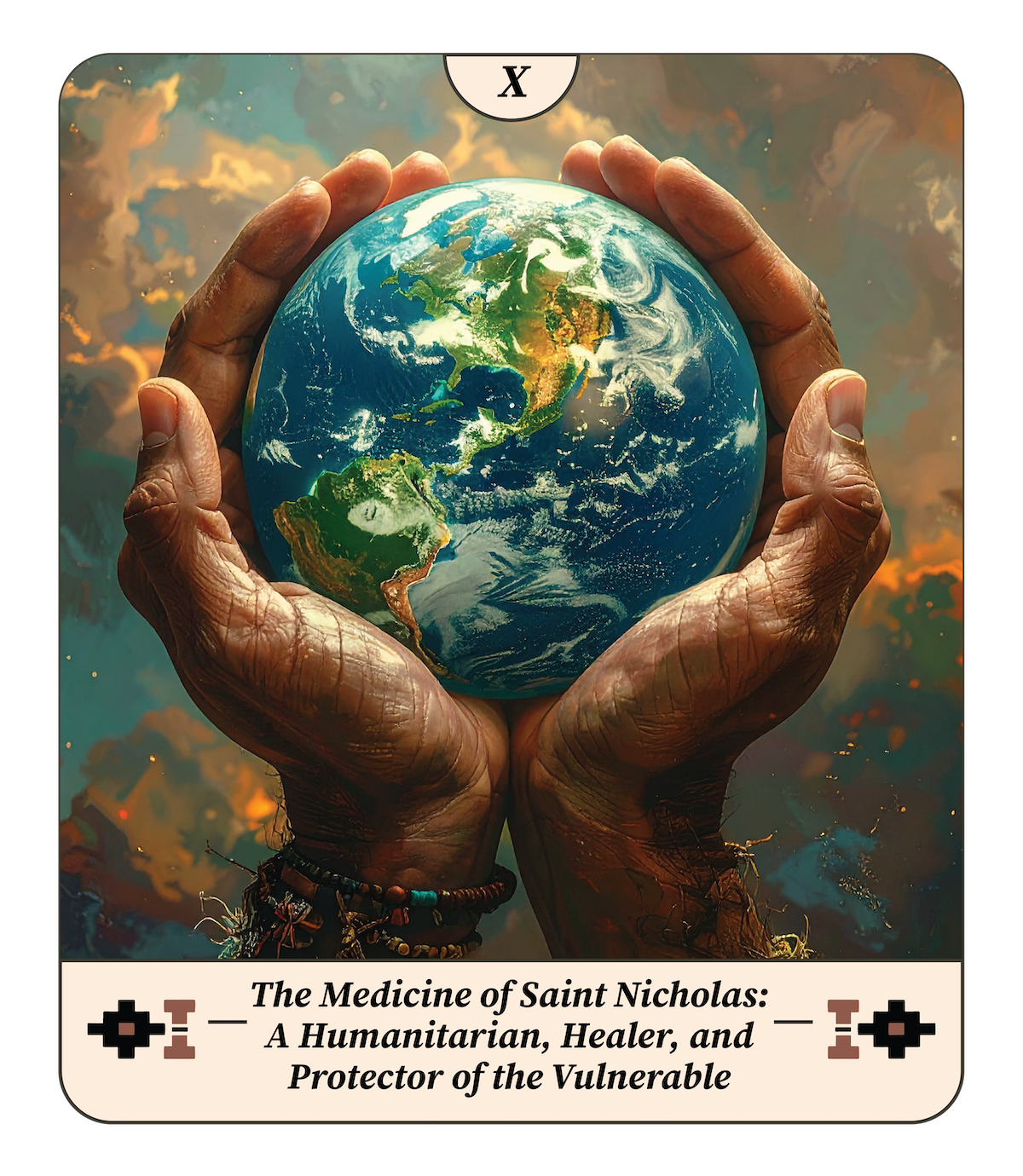
In a time when so many are struggling, carrying uncertainty, loss, and hardship, there is medicine in remembering Saint Nicholas not as a distant figure of worship, but as a living archetype of compassionate action, quiet generosity, and fierce protection of those who need it most.
Long before he became a symbol of the season, Nicholas of Myra was a real person who walked the earth in the late Roman Empire, a man who used his wealth, influence, and moral courage to shield the vulnerable from suffering. He helped those under attack: the children, the poor, the enslaved, those targeted by corrupt power. He gave anonymously, intervened decisively, and stood against injustice without seeking recognition. His life was not about doctrine or ritual, but about embodied compassion, the kind that moves through the world with steadiness, care, and Grace.
Saint Nicholas is remembered as a protector of children, the poor, sailors, prisoners, and all who found themselves at the mercy of forces beyond their control. The stories that survived him are not tales of spectacle, but acts of grounded humanity, providing dowries so young women would not be sold into slavery, confronting corrupt officials, offering food and shelter where there was none. He recognized who was most vulnerable and moved toward them with protection. His medicine was relational rather than symbolic, restoring dignity where it had been taken.
What made Nicholas extraordinary was not that he spoke about kindness, but that he lived it. He did not wait for permission or ideal conditions. He saw suffering and responded. This is the medicine he offers us now: the reminder that healing often unfolds through consistent, embodied acts of care. When compassion is lived rather than idealized, it becomes a stabilizing force, softening fear and restoring coherence. This medicine was never meant for one season; it is meant to be lived, carried forward every day.
In spiritual and metaphysical traditions, saints are approached not as distant figures, but as living allies, fields of presence that can be felt across time. When we call on Saint Nicholas, we are not asking for rescue, but inviting his frequency of protection, generosity, and moral courage into our own lives. His presence is not abstract. It is a felt steadiness, a willingness to act without recognition, and a quiet strength that restores balance within the individual and the collective.
As we move through this season, many of us are holding grief, uncertainty, or the ache of witnessing suffering we cannot resolve. Saint Nicholas reminds us that we do not need to fix everything to participate in healing. What is asked is simpler and more profound: to notice who needs care, to act without needing credit, and to understand that compassion is not passive, it is a protective force that refuses to turn away.
If you find yourself struggling this season, or if someone close to you is, call on the spirit of Saint Nicholas, not as a prayer for escape, but as a reminder of the healing power that moves through human kindness. Let his presence steady your heart. Let it guide you toward acts of care that restore dignity and connection. This is how his medicine continues, not as a story of the past, but as a living practice carried forward through ordinary people willing to embody compassion in the world.